.png&w=128&q=75)


Toyota Small SUV Fuel Consumption Compared: Which is best for you?
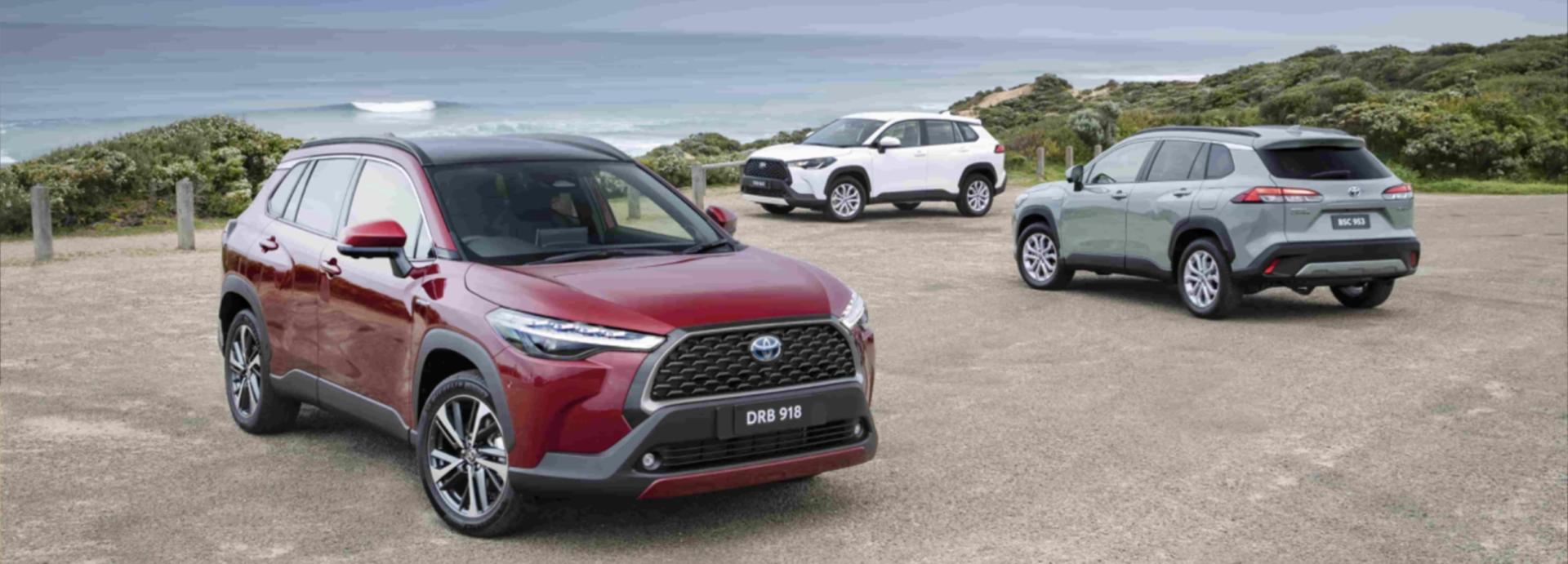
With fuel prices continuing to fluctuate, choosing a fuel-efficient SUV makes more sense than ever. Toyota's small SUV lineup offers three compelling hybrid options, each delivering impressive efficiency without compromising on capability. But which one is right for you?
We've compared the fuel consumption figures for the Yaris Cross, C-HR and Corolla Cross, using official specifications from Toyota Australia. Whether you're navigating Perth's urban streets or exploring the Perth Hills, here's what you need to know about running costs.
Fuel Consumption at a Glance
All figures are combined cycle L/100km from ADR81/02 laboratory testing.
| Model | 2WD Hybrid | AWD Hybrid | Urban Cycle |
| Yaris Cross | 3.8 L/100km | 4.0 L/100km | 3.3-3.5 L/100km |
| C-HR | 4.0 L/100km | 4.1 L/100km* | 3.7-3.8 L/100km |
| Corolla Cross | 4.2 L/100km | 4.4 L/100km | 4.0-4.2 L/100km |
*C-HR GR Sport AWD with 2.0L hybrid system
Yaris Cross: The Efficiency Champion
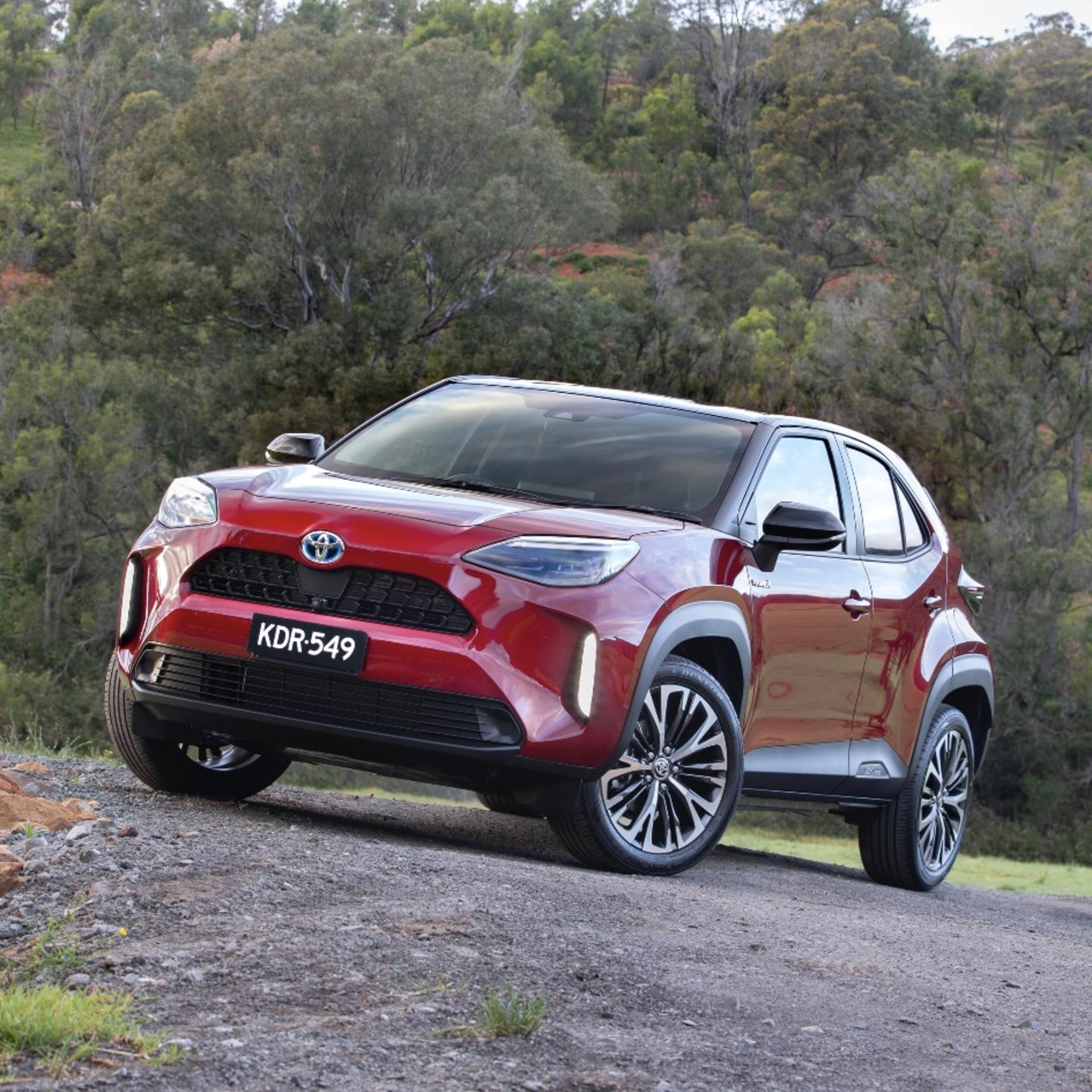
The Yaris Cross leads the pack with the lowest fuel consumption in Toyota's small SUV range. Powered by a 1.5-litre three-cylinder hybrid system producing 85kW of combined output, the Yaris Cross achieves a remarkable 3.8L/100km in 2WD form.
In urban driving, where hybrid technology really shines, the Yaris Cross can dip as low as 3.3L/100km. That's exceptional for an SUV with genuine ground clearance and SUV practicality.
Key fuel figures
Key fuel figures
- 2WD Hybrid: 3.8L/100km combined
- AWD Hybrid: 4.0L/100km combined
- Urban cycle: As low as 3.3L/100km
Best for
Best for
- City commuters
- First-time SUV buyers
- Anyone prioritising maximum fuel savings
C-HR: Style Meets Efficiency
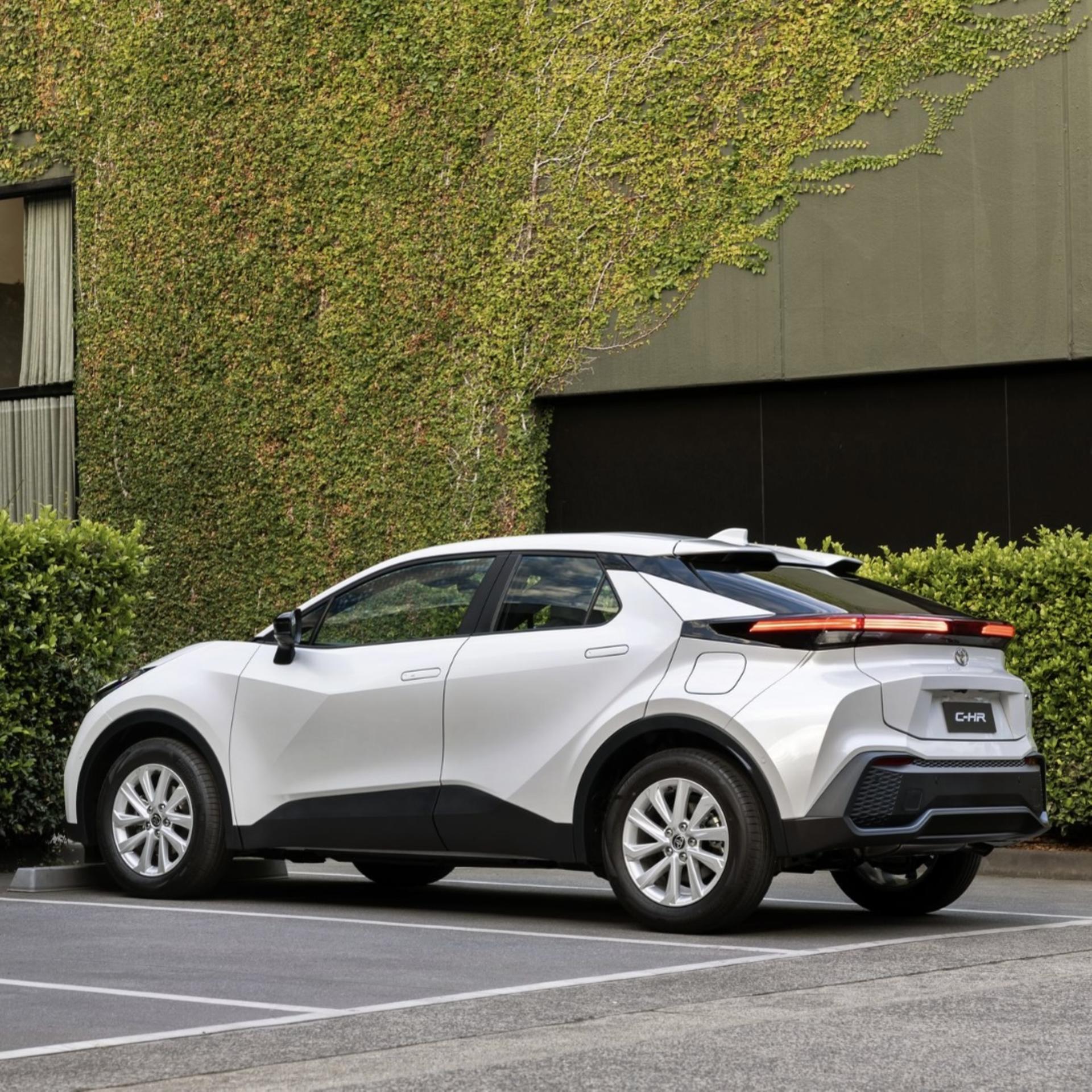
The European-designed C-HR brings distinctive styling to the small SUV segment without sacrificing efficiency. The GXL and Koba grades use a 1.8-litre hybrid system producing 103kW, achieving 4.0L/100km on the combined cycle.
For those wanting more performance, the GR Sport grade steps up to a 2.0-litre hybrid with 146kW and standard AWD, still managing an impressive 4.1L/100km combined. The C-HR actually performs better in urban conditions, achieving 3.7-3.8L/100km around town.
Key fuel figures
Key fuel figures
- GXL/Koba 1.8L Hybrid 2WD: 4.0L/100km combined
- GR Sport 2.0L Hybrid AWD: 4.1L/100km combined
- Urban cycle: 3.7-3.8L/100km
Best for
Best for
Design-conscious buyers who want standout styling with strong urban efficiency.
Corolla Cross: The Practical Performer
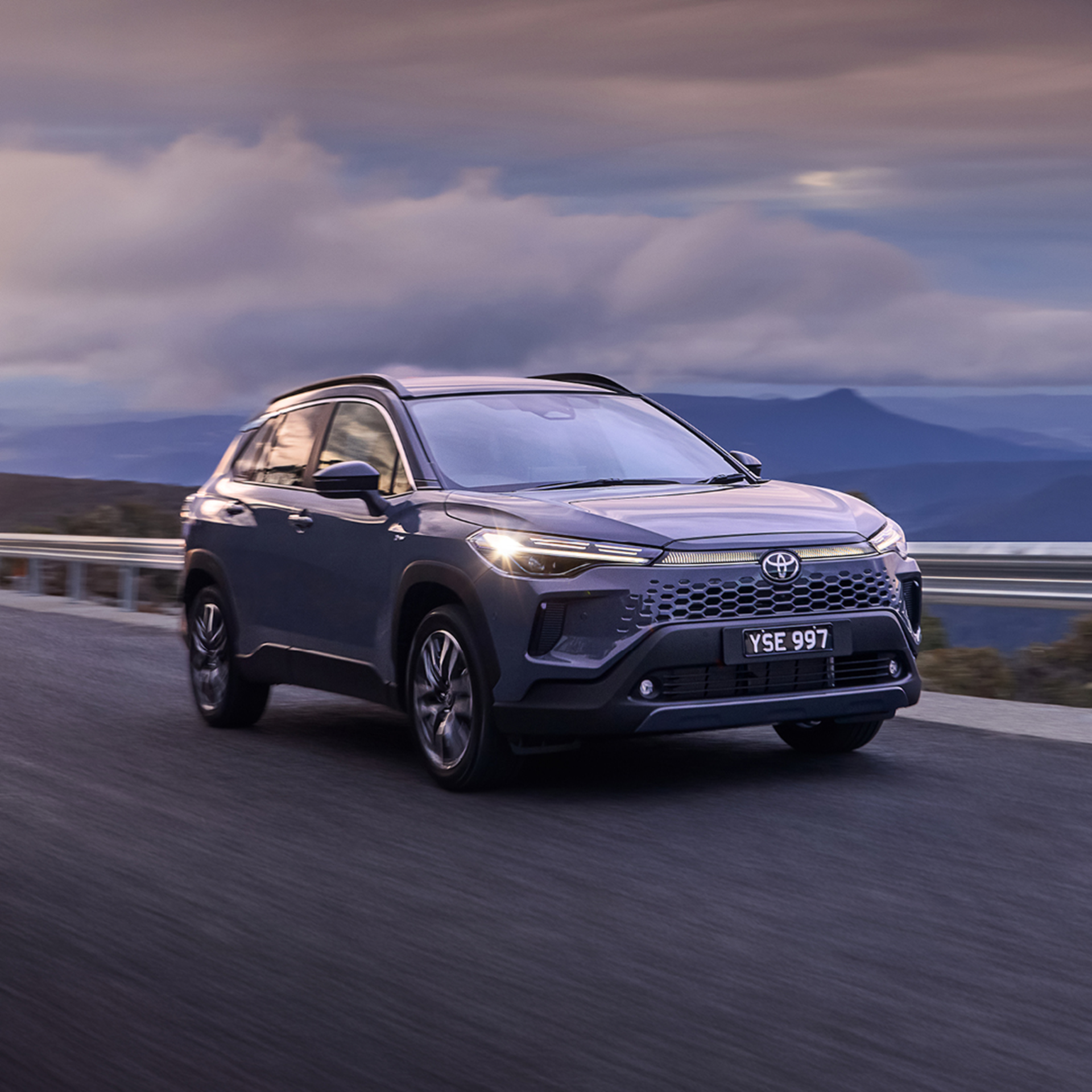
The Corolla Cross offers the most interior space of the three, powered by a larger 2.0-litre four-cylinder hybrid producing 146kW. While it consumes slightly more fuel than its smaller siblings, 4.2L/100km combined for 2WD models is still remarkably efficient for an SUV with up to 425 litres of boot space.
The AWD variants manage 4.4L/100km combined, while the sporty GR Sport AWD sits at 4.5L/100km. In urban conditions, 2WD models achieve around 4.0L/100km.
Key fuel figures
Key fuel figures
- GX/GXL/Atmos 2WD: 4.2L/100km combined
- GXL/Atmos AWD: 4.4L/100km combined
- GR Sport AWD: 4.5L/100km combined
- Urban cycle: 4.0-4.3L/100km
Best for
Best for
- Families needing more space
- Buyers wanting the balance of efficiency practicality
- Those seeking powerful hybrid performance
What Affects Real-World Fuel Economy?
These figures are achieved under laboratory conditions and provide a useful comparison point. Your actual fuel consumption will vary based on several factors.
Driving style plays a significant role. Smooth acceleration and braking allows the hybrid system to recapture more energy through regenerative braking. Aggressive driving reduces efficiency.
Route type matters too. Hybrid vehicles excel in stop-start urban traffic where the electric motor handles low-speed driving. Highway cruising at constant speeds relies more on the petrol engine.
Climate control affects consumption. Air conditioning increases fuel use, particularly in Perth's hot summers.
Load and accessories add weight and can impact efficiency. Roof racks, heavy cargo, and additional accessories increase fuel consumption.

All three Toyota small SUVs deliver impressive hybrid efficiency. The Yaris Cross wins on pure fuel economy, the C-HR balances style with efficiency, and the Corolla Cross offers the most space while maintaining strong fuel figures. The best choice depends on your priorities. Need maximum fuel savings? Yaris Cross. Want head-turning design? C-HR. Require more space and power? Corolla Cross.
All three Toyota small SUVs deliver impressive hybrid efficiency. The Yaris Cross wins on pure fuel economy, the C-HR balances style with efficiency, and the Corolla Cross offers the most space while maintaining strong fuel figures. The best choice depends on your priorities. Need maximum fuel savings? Yaris Cross. Want head-turning design? C-HR. Require more space and power? Corolla Cross.
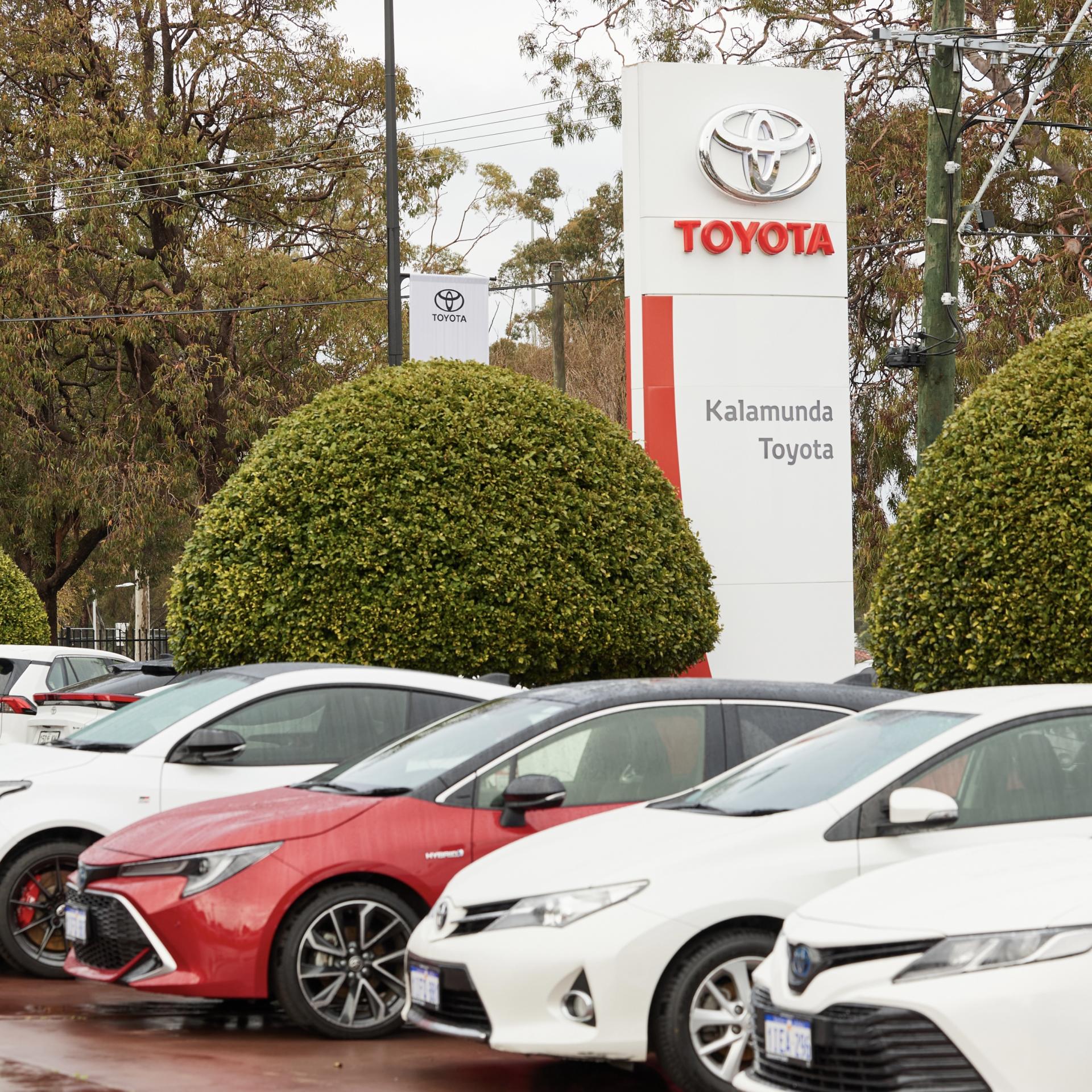
Experience the Difference at Kalamunda Toyota
Numbers only tell part of the story. The best way to understand which small SUV suits your lifestyle is to get behind the wheel. Our team at Kalamunda Toyota can help you explore all three models and find your perfect match. Book a test drive and experience Toyota hybrid efficiency for yourself.
Enquiry Form
Kalamunda Toyota
Kalamunda Toyota - Service
Kalamunda Toyota - Parts

Kalamunda Toyota
- Monday: 8:00am-6:00pm
- Tuesday: 8:00am-6:00pm
- Wednesday: 8:00am-8:00pm
- Thursday: 8:00am-6:00pm
- Friday: 8:00am-6:00pm
- Sat: 8:00am-1:00pm
- Sun: Closed
Kalamunda Toyota - Service
Kalamunda Toyota - Parts
See What Our Customers Think
4.3 rating out of 296 reviews
Grant Lauterbach
Best service from any Toyota dealer in Perth. Every time I go there it is a 5 star experience. Back again today (02/09/2026) and same red carpet service. One...
View moreDave T
Spoke with Brodie from the service team - super friendly and helpful!
S H
Great team, polite and helpful.
Waqas Masood
I had an opportunity to buy a pre-owned vehicle from Kalamunda Toyota! The team made it feel more than just a transaction: it was a wonderful experience. Th...
View moreZaini Malik
great experience with kalamunda toyota. reasonable prices as compared with market. Buy toyota camry 2020 sports hybrid . Highly recommend.
Megan Simmonds
Great service. Great new car.
Joanna Smalpage
We recently purchased a new LC 300 VX through Kalamunda Toyota. Joss Clark , the new car manager was sensational and assisted us through it all, great price,...
View moreBelinda Reffell
We bought a car last year and have had a few warranty issues since, but Amy has made the whole experience unbelievably easy. She’s been fantastic every singl...
View morePatrick F
My family and i had a such a great experience at Kalamunda Toyota buying a used 2021 Hyundai i30 N line. Claudine our sales consultant was perfect after look...
View moreKellie Wholagan
We had the pleasure of Claudine helping us with the purchase of our new vehicle. Claudine is so friendly , professional and easy to communicate with. We felt...
View more← Swipe →
